
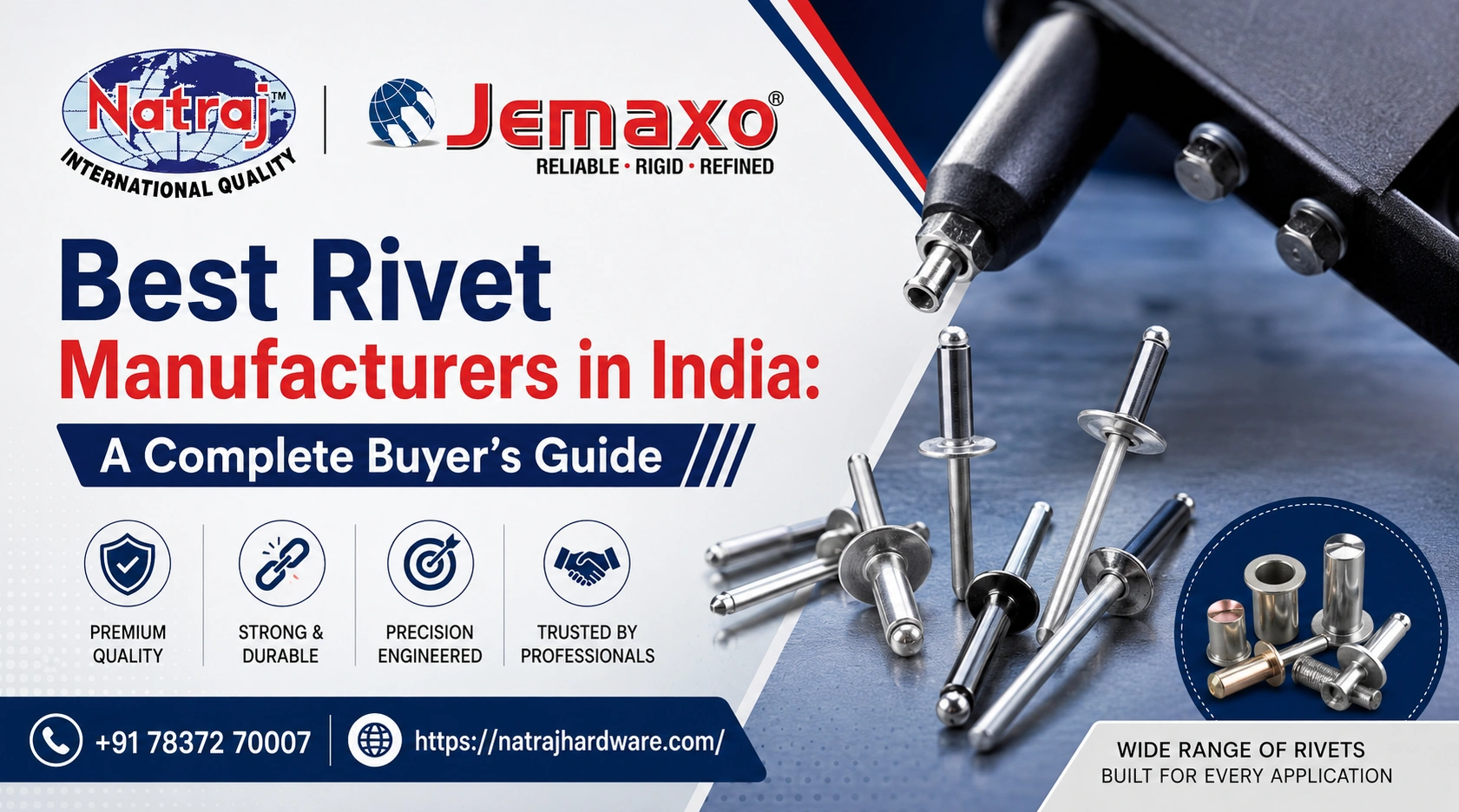
 Rivets may be small, but they hold together some of the most demanding structures in modern industry — from aircraft fuselages and automobile chassis to electrical switchgear and steel bridges. The world’s most reliable hubs for Best Rivet Manufacturers in India, thanks to a combination of skilled cold-forging expertise, competitive raw material access, and decades-old fastener clusters in cities like Mumbai, Delhi, Ahmedabad, Chennai, and Pune.
If you’re sourcing rivets for your business, this guide will help you understand the types of rivets available, where India’s manufacturing strength lies, and how to evaluate a supplier before you commit to an order.
Why India Is a Strong Sourcing Destination for Rivets
India’s fastener industry has built a reputation over several decades, with many manufacturing units tracing their roots back 30–40 years. A few factors make Indian rivet manufacturers competitive on the global stage:
- Established industrial clusters — Mumbai (and nearby Vasai), Delhi-NCR, Ahmedabad, Chennai, and Pune each host dense networks of forging units, tool rooms, and finishing facilities.
- Wide material capability — Indian manufacturers commonly work with mild steel, stainless steel, aluminium, copper, brass, and German silver, covering nearly every industrial application.
- Cost-competitive precision manufacturing — Cold-forging, wire-drawing, and stress-relieving processes are done in-house by many units, keeping both cost and lead times in check.
- Export experience — A number of manufacturers already supply to the Middle East, Southeast Asia, Africa, and North America, meaning they’re familiar with international quality documentation and packaging standards.
Types of Best Rivet Manufacturers in India
Before shortlisting a supplier, it helps to know which rivet category you actually need:
- Solid Rivets — The traditional, one-piece rivet used where maximum strength is required, common in structural and heavy engineering work.
- Blind Rivets (Pop Rivets) — Installed from one side only, these are widely used in automotive, electrical enclosures, and sheet-metal assembly where access to both sides isn’t possible.
- Semi-Tubular Rivets — Partially hollow at the tip, these need less force to install and are popular in brake linings, clutch facings, and electrical component assembly.
- Structural Rivets — Designed for heavy-load, single-sided applications such as steel frameworks and machinery mounts.
- Specialty Rivets — Includes step rivets, plate rivets, snap-head, countersunk, and mushroom-head rivets for niche applications across aerospace, defense, and consumer goods.
What to Look for in a Rivet Manufacturer
Because “best” depends heavily on your material, volume, and industry, here’s a practical checklist to evaluate any manufacturer:
- Material range and certifications — Confirm they work with your required grade (SS304, aluminium alloys, brass, etc.) and hold relevant quality certifications such as ISO 9001.
- In-house capabilities — Manufacturers with their own tool rooms, wire-drawing units, and testing labs typically offer better consistency and shorter lead times than trading-only suppliers.
- Industry-specific experience — A supplier serving automotive OEMs will have different quality systems than one focused on electrical or construction hardware — match their track record to your sector.
- Minimum order quantities and customization — Some manufacturers cater only to bulk industrial buyers, while others support smaller or custom-dimension orders.
- Export documentation experience — If you’re importing, check whether they’re used to handling international shipping, packaging, and compliance paperwork.
- Response time and technical support — Reliable communication and willingness to share test reports or samples is often a strong signal of manufacturing discipline.
Regions to Explore
- Mumbai and Vasai (Maharashtra) — One of India’s largest rivet-manufacturing belts, particularly strong in blind rivets, semi-tubular rivets, and stainless steel variants, with several units holding decades of export experience.
- Delhi-NCR — A dense hardware and fastener trading hub with numerous manufacturers and wholesalers offering fast turnaround for domestic buyers.
- Ahmedabad (Gujarat) — Known for stainless steel, aluminium, copper, and brass rivets, often serving both industrial and export markets.
- Chennai (Tamil Nadu) — Home to manufacturers specializing in brake-lining rivets, clutch-facing rivets, and precision cold-forged fasteners for the automotive sector.
- Pune (Maharashtra) — A growing base for blind-rivet manufacturers serving the automotive and general engineering industries.
How to Shortlist the Right Supplier
Rather than relying on any single “top manufacturers” list — since rankings on directory sites are often self-submitted — the safer approach is to:
- Identify your exact rivet type, material, and application (automotive, construction, electrical, aerospace, etc.).
- Shortlist 4–5 manufacturers from the relevant industrial cluster.
- Request samples and mechanical test reports (tensile and shear strength).
- Compare certifications, in-house testing facilities, and past client industries.
- Start with a trial order before committing to bulk purchasing.
Final Thoughts
Best Rivet Manufacturers in India sector offers strong depth — spanning solid, blind, semi-tubular, and structural rivets across nearly every metal type. Rather than chasing a single “best” name, the smarter move is to match your technical requirements (material, load rating, industry standard) with a manufacturer’s proven specialization and quality systems. Reaching out to two or three shortlisted suppliers for samples and certifications is the most reliable way to find the right long-term fastening partner for your business.
Frequently Asked Questions
1. Which type of rivet is best for automotive applications?
Semi-tubular and blind rivets are the most commonly used in automotive work, especially for brake linings, clutch facings, and sheet-metal assembly, since they install quickly and handle vibration well.
2. Are Indian rivet manufacturers suitable for export orders?
Yes. Many established manufacturers, particularly in Mumbai, Ahmedabad, and Chennai, already export to the Middle East, Africa, Southeast Asia, and North America, and are familiar with international quality documentation and packaging requirements.
3. What is the difference between a solid rivet and a blind rivet?
A solid rivet is a one-piece fastener installed with access from both sides, offering maximum strength for structural work. A blind rivet (pop rivet) is installed from one side only, making it ideal when the back of the joint is inaccessible.
4. How do I verify the quality of a rivet manufacturer before ordering in bulk?
Ask for ISO certification, mechanical test reports (tensile and shear strength), and material composition certificates. Requesting a sample batch and placing a small trial order before a bulk purchase is also a reliable way to check consistency.
5. What materials are commonly used for rivets in India?
Indian manufacturers typically work with mild steel, stainless steel, aluminium, copper, brass, and occasionally German silver, covering applications from general construction to precision electronics.